

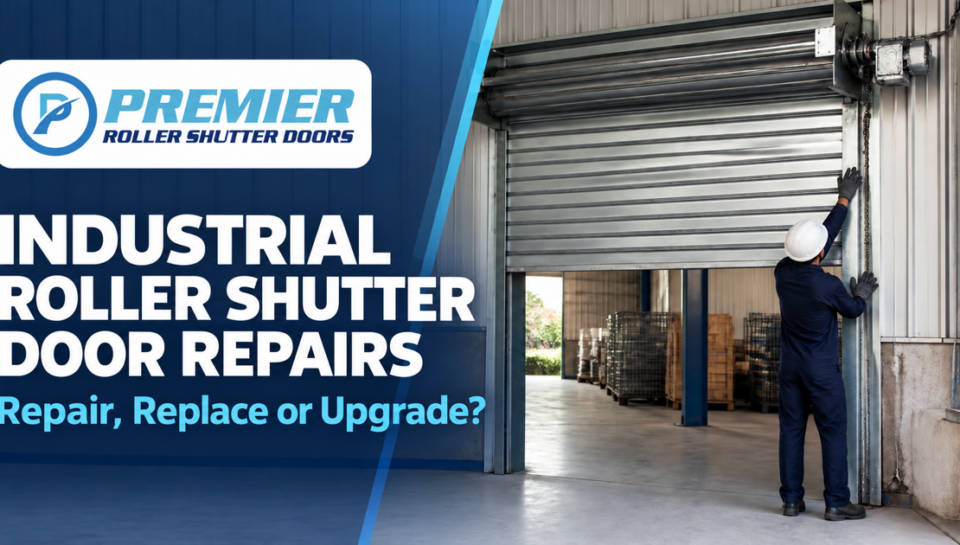
An industrial roller shutter door is easy to overlook when it is working properly. Once it becomes noisy, slow, unreliable or unsafe, however, it can interrupt access, delay operations and leave a building less secure.
The difficult question is often not whether the shutter needs attention, but what kind of attention it needs. Is a repair enough? Has the door reached the point where replacement is the better investment? Or would an upgrade improve security, safety and day-to-day use?
The right decision depends on the condition of the curtain, guides, barrel, motor and controls, as well as the age of the door and the role it plays in the building.
When a roller shutter repair makes sense
Repair is usually the most practical route when the main structure of the shutter is still sound and the problem is limited to specific components. A prompt repair can prevent a small issue from causing additional damage or a complete failure.
Common repairable problems include:
- A motor, switch, remote or control fault on an electric shutter.
- Worn rollers, bearings, locks, guides or other moving parts.
- A small number of damaged or misaligned shutter slats.
- A door that sticks, moves unevenly or no longer closes correctly.
- Unusual noise caused by loose, worn or poorly aligned components.
A professional inspection is important because the visible symptom is not always the cause. Replacing one component without correcting the underlying alignment or balance problem may only provide a temporary result.
Warning signs that should not be ignored
Roller shutter problems tend to become more expensive when a damaged door is kept in service. Arrange an assessment if the shutter starts moving slowly, jerks during operation, drops unexpectedly, leaves gaps when closed, makes grinding or scraping sounds, or requires repeated resets.
A shutter that feels unusually heavy to operate manually, or an electric door that strains during movement, may have a spring, balance, motor or mechanical issue. Stop using the door if continued operation could create a safety risk or cause further damage.
When replacement may be the better investment
Repairing an older shutter is not always the lowest-cost decision over time. Replacement becomes more attractive when faults are frequent, important parts are no longer readily available or the curtain and supporting structure have suffered extensive damage.
Replacement should be considered when:
- The shutter has widespread corrosion, distortion or impact damage.
- Multiple components are failing and repair costs are accumulating.
- The door is unreliable enough to disrupt deliveries, access or trading.
- The existing shutter no longer provides the security required for the site.
- The opening, building use or operational requirements have changed.
- The system cannot be brought up to an acceptable safety standard economically.
The useful comparison is not simply repair cost versus replacement price. It should include downtime, repeated call-outs, availability of spares, the risk of another failure and the expected remaining life of the existing door. If replacement is on the cards, our buyer’s guide to industrial roller shutter doors covers sizes, materials and what to check before you buy.
When an upgrade is the best option
A shutter may still be structurally serviceable while no longer meeting the needs of the business. In that situation, an upgrade can be more appropriate than a like-for-like repair.
Possible upgrades include motorisation, improved controls, enhanced locking, safety devices, access-control integration or replacement of worn panels and guides. The best solution depends on the door design, frequency of use and the environment in which it operates.
For a busy warehouse or commercial entrance, an upgrade may improve speed and reliability. For a retail or security-sensitive site, better locking and control can be the priority. The upgrade should solve a real operational problem rather than add complexity that the site does not need.
Repair, replace or upgrade: five questions to ask
- How old is the shutter and how often has it required repair?
- Is the damage isolated, or does it affect the main curtain and structure?
- Are suitable replacement parts available?
- What would another failure cost the business in downtime or security exposure?
- Would a new or upgraded system better suit the way the entrance is now used?
Why a professional inspection matters
Industrial roller shutters are heavy moving systems. A reliable recommendation requires more than looking at one damaged slat or listening to a noisy motor. The full door should be checked, including alignment, guides, curtain condition, fixings, barrel, springs where applicable, motor, controls and safety features.
A proper inspection gives the business a clear choice: repair the fault, plan a replacement before failure, or upgrade the system to improve performance. It also helps avoid spending money on repeated minor repairs when the complete installation is already nearing the end of its useful life.
Protecting the life of your roller shutter
Regular maintenance is the simplest way to reduce unexpected failures. Keep the operating area clear, report changes in movement or noise early and avoid forcing a shutter that is jammed or misaligned. Planned inspections are particularly valuable for doors used many times a day or relied on for critical access and security.
Need advice on an industrial roller shutter door?
Premier Roller Shutter Doors works nationwide from our Gauteng base in Germiston, serving commercial and industrial sites in every province. We can assess a faulty or ageing shutter and recommend whether repair, replacement or an upgrade is the most practical next step. A clear assessment helps you protect access, security and business continuity without paying for work the door does not need.
Request a quote or arrange an inspection, find out more about our repair and maintenance service, or browse our full roller shutter door range.